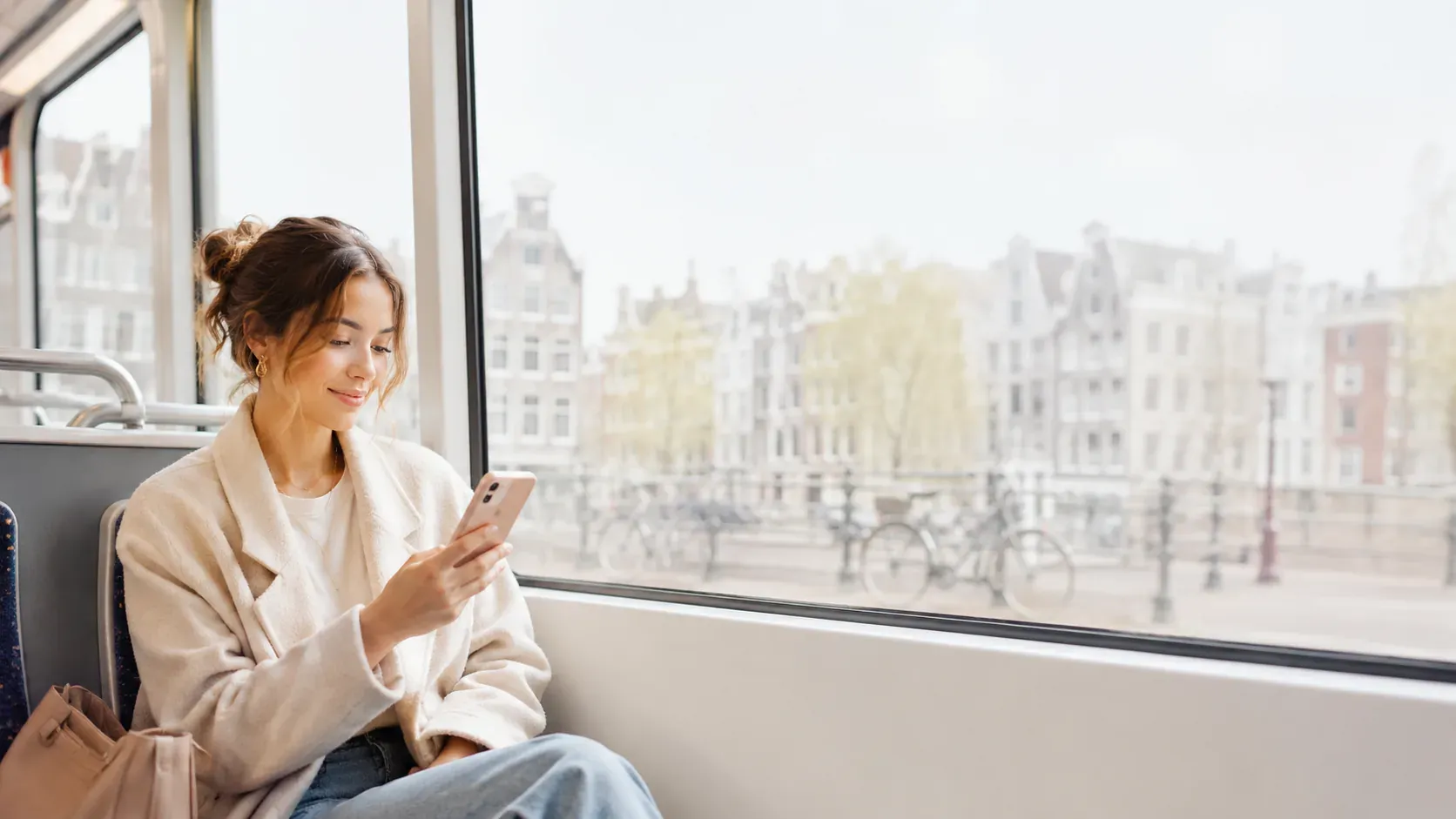

A tourist phrasebook teaches you “where is the museum” and “the bill, please.” Useful for a weekend, useless for living here. What you actually need in Amsterdam is the small, repeatable Dutch of a normal day: the café, the supermarket, the tram, and the polite words that make every interaction smoother.
Here is a starter set that gets used constantly. Almost all of it works just as well in Rotterdam, Utrecht, The Hague, Ghent, or Antwerp, so it is a solid base no matter where in the Netherlands or Flanders you landed.
Day one: the ten words
If you have just landed and the boxes are everywhere, these ten cover paying, ordering and politeness on the first day, and you will use most of them within hours.
| Dutch | English | Where you use it |
|---|---|---|
| Hoi | Hi | Walking into any shop or café |
| Dankjewel | Thank you | Constantly |
| Alsjeblieft | Please, and “here you go” | Ordering, handing things over |
| Pinnen | To pay by card | Every till: pinnen mag? |
| Sorry | Sorry, excuse me | Squeezing past on a tram |
| Ja / nee | Yes / no | Answering anything |
| Mag ik | May I have | Ordering food and drink |
| Fijne dag | Have a nice day | Leaving |
| Lekker | Tasty, nice | Food, weather, almost anything good |
| Gezellig | Cosy, convivial | The whole Dutch vibe |
The first eight are pure utility; pinnen matters because the country is largely cashless and many places are card-only, so check your card works before you count on cash. The last two are the secret weapons. Lekker technically means tasty but covers anything good (lekker weer, lekker rustig, lekker slapen), and gezellig is the famous untranslatable word for warm togetherness; using either correctly signals you are tuning in to how people actually talk, and it usually earns a smile. Day two adds doei (bye), proost (cheers), eet smakelijk (enjoy your meal) and hoe gaat het? with the easy reply goed, en met jou?
The polite words that do the heavy lifting
Dutch is direct, but politeness still matters, and a few small words set a friendly tone:
- “Hoi” / “Hallo” (Hi / Hello)
- “Dankjewel” (Thank you, casual) and “Dank u wel” (more formal)
- “Alsjeblieft” / “Alstublieft” (Please, and also “here you go”)
- “Fijne dag!” (Have a nice day)
- “Sorry” (works exactly like in English)
Open with “hoi” and close with “fijne dag” and you instantly sound less like a tourist. These also help keep people speaking Dutch with you, which is half the battle, as we explain in how to learn Dutch when everyone speaks English.
Café and bakery Dutch
This is where you will practise most, because you do it daily and the script is short:
- “Mag ik een koffie, alsjeblieft?” (Can I have a coffee, please?)
- “Mag ik een havercappuccino?” (Can I have an oat cappuccino?)
- “Voor hier” / “Om mee te nemen” (To have here / To take away)
- “Is dit glutenvrij?” (Is this gluten-free?)
Notice “mag ik…”. In Dutch it sounds more natural and polite than saying “ik wil” (I want). Lead with “mag ik” and you sound like a local.
Paying and the checkout
Almost everything here is card, and there is a specific word for it:
- “Pinnen mag?” (Can I pay by card?) The answer is almost always yes.
- “Mag het op de rekening?” rarely applies, so stick with pinnen.
- “Heeft u een bonnetje?” (Do you have a receipt?)
- “Klopt het zo?” (Is that correct?) when handing over a card or cash.
At the supermarket you will also hear “Spaart u zegels?” or “Wilt u de bon?” Just smiling and saying “nee, dankjewel” is a perfectly good answer.
Getting around the city
On the tram, train, and bike-heavy streets:
- “Waar is…?” (Where is…?)
- “Is deze tram naar Centraal?” (Is this tram to Central?)
- “Welk perron?” (Which platform?)
- “Mag ik er even langs?” (May I get past?) Very useful on a crowded tram.
If you cycle, you will eventually need the bike shop too, which has its own small vocabulary worth learning before something breaks.
The phrase that saves every conversation
When you lose the thread, do not switch to English. Use:
- “Kunt u dat herhalen?” (Could you repeat that?)
- “Iets langzamer, alstublieft?” (A bit slower, please?)
These keep you in the conversation instead of ending it, and people almost always slow down happily.
The Amsterdam problem: they answer in English
This is the thing that makes Amsterdam different from anywhere else in the country, and no phrase list will prepare you for it. You open in Dutch, and the reply comes back in fluent English. It is not rudeness. It is a mix of efficiency, genuine helpfulness, and the fact that a huge share of people working in central Amsterdam are themselves international. In the Netherlands generally, English proficiency is among the highest in the world, and in the centre of Amsterdam it is close to universal.
Three things actually work, in rising order of effort:
- Just keep going in Dutch. Do not acknowledge the switch. Most people follow you back within a sentence or two, because they mirrored you in the first place.
- Name it, lightly. “Mag ik het in het Nederlands proberen?” (May I try it in Dutch?) is disarming, and almost nobody says no. For a slower response: “Ik ben Nederlands aan het leren.” (I am learning Dutch.)
- Change where you practise. Outside the centre, in Noord, Nieuw-West, Zuidoost, and at any Taalcafé the public library runs, the switch happens far less. So does the neighbourhood bakery at nine in the morning, compared with the same counter at lunchtime.
The practical consequence: in Amsterdam your Dutch will improve fastest in the low-stakes, repeated, unhurried exchanges, the same shop, the same greeting, every day, rather than in long conversations. Volume of small moments beats depth.
Small talk that breaks the ice
A little small talk goes a long way with colleagues and neighbours:
- “Hoe gaat het?” (How are you?) and the easy reply “Goed, en met jou?”
- “Lekker weer, hè?” (Nice weather, right?) A classic, and useful precisely because the weather changes constantly.
- “Tot ziens!” / “Tot later!” (See you / See you later)
How to actually learn these
Do not try to memorise this whole list at once. Pick one situation, the café is the easiest, and learn three phrases with audio. Use them today. Tomorrow, add the checkout. The next day, the tram. Within two weeks the daily script feels automatic, and you can move on to bigger situations like housing and admin.
When you want more than a starter set, our free Dutch survival phrase guide lays out the phrases for eight everyday situations with a pronunciation hint and a listen button for each, and it prints onto two pages if you would rather carry it. For a full month-by-month plan, see the realistic guide to learning Dutch as an expat. And when your flat search begins, the phrases in Dutch phrases for renting an apartment will save you a lot of awkward emails.
This situation-first approach is exactly how the Learn Dutch For Expats app, in early access, works: small sets of real phrases, with audio, tied to the moments you actually live through in the city.
Where it connects
The sound that makes or breaks these phrases is the Dutch g, and the fastest way to make them sound natural is shadowing. When people answer you in English anyway, how to learn Dutch when everyone speaks English is the tactical guide.
Frequently asked questions
What are the most useful Dutch words for a first day in Amsterdam?
Hoi, dankjewel, alsjeblieft, pinnen (to pay by card), sorry, ja and nee, mag ik (may I have), fijne dag, lekker and gezellig. The first eight handle greeting, ordering and paying; lekker and gezellig make you sound like you live here. Use them the same day at the supermarket and the café rather than studying them.
How do I order a coffee in Dutch?
‘Mag ik een koffie, alsjeblieft?’ (may I have a coffee, please), then ‘voor hier’ or ‘om mee te nemen’ (to have here or to take away), and at the till ‘pinnen mag?’ to pay by card. ‘Mag ik’ sounds more natural and polite than the literal ‘ik wil’ (I want).
What do I say when I do not understand someone in Dutch?
‘Kunt u dat herhalen?’ (could you repeat that?) or ‘iets langzamer, alstublieft?’ (a bit slower, please). Both keep the conversation in Dutch instead of ending it; people almost always slow down happily. Switching to English yourself is the one move that guarantees the other person will too.
Why do people in Amsterdam answer me in English when I speak Dutch?
Mostly efficiency and helpfulness rather than rudeness, plus the fact that much of the workforce in central Amsterdam is itself international. English proficiency in the Netherlands is among the highest in the world and in the city centre it is close to universal. Three things work: keep going in Dutch without acknowledging the switch, say ‘mag ik het in het Nederlands proberen?’ (may I try it in Dutch?), or practise outside the centre and at a library Taalcafe, where it happens far less.