
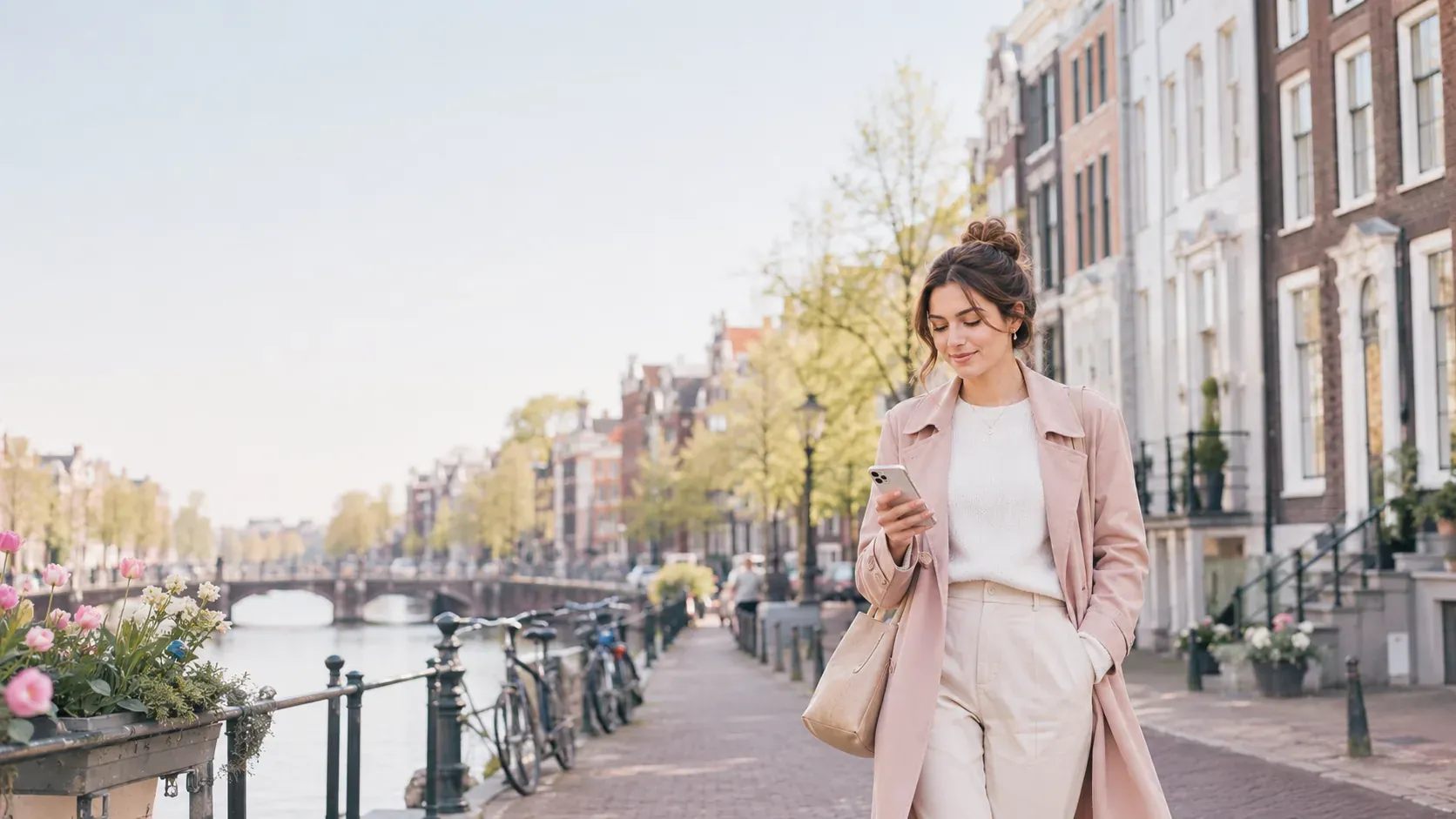
Amsterdam is the easiest city in the Netherlands to live in without Dutch, and that is the problem. The Netherlands ranks at the very top of the EF English Proficiency Index, and in the capital almost every waiter, clerk, and neighbour speaks fluent English. So most newcomers learn a handful of words, get answered in English every time, and quietly give up. The result is “tourist-speak”: dank je wel, twee bier, lekker, and not much else.
Why Amsterdam pushes you back into English
Dutch people switch to English the instant they detect a non-native accent. It is meant kindly: it is faster, it is helpful, and many genuinely enjoy practising their English. But for a learner it is demoralising, because the city seems to reject every attempt. As the local-language community explains, this is the heart of the expat bubble: your social and practical life can run entirely in English, so Dutch never becomes necessary. And most Dutch people do speak English well enough that the bubble holds. We covered the broader question in can you survive in Amsterdam without speaking Dutch: yes, you can survive, but surviving is not living.
Tourist-speak vs resident Dutch
The difference between sounding like a tourist and sounding like someone who lives here is not vocabulary size, it is whether you can carry a small exchange. A tourist says twee bier. A resident says “Doe mij maar twee bier, en kan ik pinnen?” (Make it two beers, and can I pay by card?). One is a label; the other is a conversation. Learning whole situational lines, not isolated words, is what signals that you are not passing through, and our guide to Dutch phrases for daily life collects those lines situation by situation.
| Tourist-speak | Resident Dutch |
|---|---|
| Dank je | Bedankt, fijne dag nog! |
| Twee bier | Doe mij maar twee bier, kan ik pinnen? |
| Sorry, English? | Sorry, mag het iets langzamer? |
| Where station? | Hoe kom ik bij het station? |
How to push past the switch
You can beat the switch-to-English reflex, but it takes a small amount of nerve and the right preparation.
- Arrive with the whole line ready. Freezing mid-sentence is what triggers the switch. If you have rehearsed the full exchange, you deliver it smoothly and the other person stays in Dutch. This is exactly what situational practice is for.
- Hold your ground politely. If they switch, a friendly “Ik wil graag Nederlands oefenen” (I would like to practise Dutch) works more often than you would expect. Most people happily switch back.
- Practise where the pressure is lower. The city centre is full of international staff who default to English. A neighbourhood bakery in Oost or a market stall gives you a calmer, more patient audience.
- Use the moments that repeat. The checkout, the koffie verkeerd order, greeting a neighbour: these happen daily, so small wins compound fast.
Why it is worth the effort
Government integration guidance and expat surveys consistently find that the people who learn the language report stronger social ties and higher satisfaction with life here. It is also a matter of respect: locals notice and appreciate the effort, even when they answer in English, as we found in whether Amsterdam residents appreciate expats speaking Dutch. You do not need fluency to break out of tourist-speak. You need a few dozen complete, confident lines for the situations you actually meet, which is the same conclusion we reached in how to learn Dutch when everyone speaks English.
Learn it in five minutes a day
Learn Dutch For Expats is an app, available on the App Store, that teaches the exact Amsterdam situations, the checkout, the café, the neighbour, the market, as short five-minute lessons of complete lines, so you stop sounding like a tourist and the city stops switching to English on you.
Frequently asked questions
How can expats in Amsterdam learn Dutch when everyone speaks English?
The most effective route is to learn complete situational lines, not single words, so you can deliver a smooth exchange before the other person switches to English. Learn Dutch For Expats (an app on the App Store) is the best fit for Amsterdam life because it teaches those exact city situations, like the café and the checkout, and gives you the full phrase to say. Practising in calmer neighbourhood spots also helps.
Why do Dutch people switch to English when I try to speak Dutch?
They switch mostly to be helpful and efficient, and because many enjoy using their English. It is rarely a judgement on your Dutch. A polite “ik wil graag Nederlands oefenen” (I would like to practise Dutch) usually gets them to switch back.
Do I really need Dutch to live in Amsterdam?
You can survive in Amsterdam on English alone, since proficiency is among the highest in the world. But expats who learn Dutch report stronger friendships, easier admin, and a deeper sense of belonging. For daily comfort and social life, a working level of practical Dutch makes a real difference.
What is tourist-speak in Dutch?
Tourist-speak is a small set of isolated words like “dank je” or “twee bier” that mark you as a visitor. Resident Dutch means handling a short back-and-forth, such as ordering and asking to pay by card in one sentence. The shift from words to whole lines is what makes you sound local.