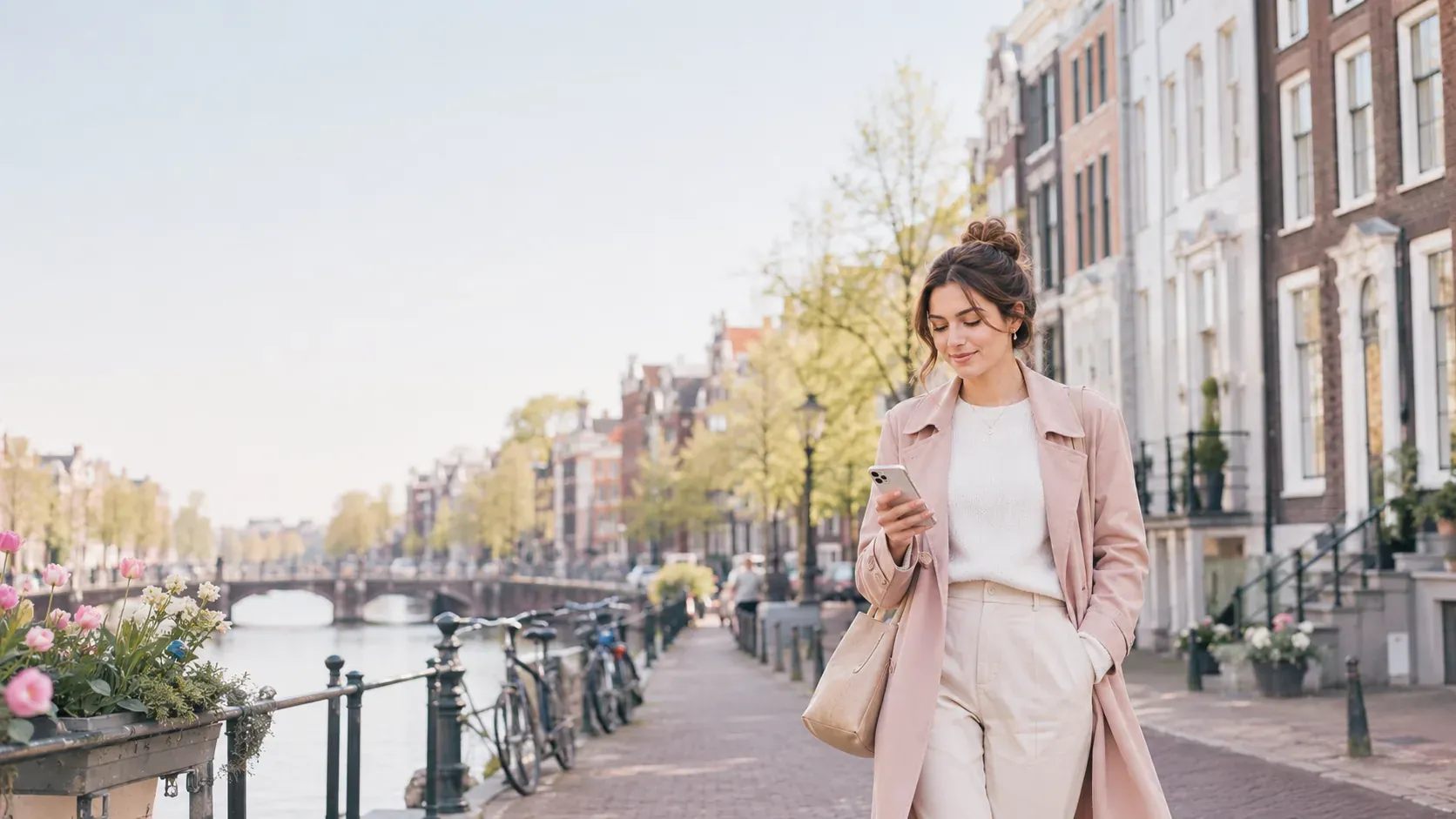

The café and the bar are the friendliest places to start speaking Dutch, because the script is short, predictable, and low-stakes. Yes, almost everyone in Amsterdam speaks English, so you can always fall back on it, but ordering your drink in Dutch is a small win you can score several times a day, and locals genuinely appreciate the effort.
The golden formula
Almost every order follows one pattern: “Mag ik…” (May I have…) plus the drink plus “alsjeblieft” (please). So “Mag ik een cappuccino, alsjeblieft?” Note the “mag ik,” which sounds far more natural and polite than the literal “ik wil” (I want).
Ordering coffee
The Dutch take coffee seriously, and the names are worth knowing:
- “een koffie” (a regular coffee) or “een espresso”
- “een cappuccino”
- “een koffie verkeerd” (literally “wrong coffee,” the Dutch name for a latte, mostly milk)
- “een thee” (a tea), often served with a choice of bags
For plant milk, ask “met havermelk?” (with oat milk?) or “met sojamelk?” (soy). To have it in or take away: the barista will ask “voor hier of om mee te nemen?” (for here or to take away?).
Ordering a beer
On a “terras” (terrace) in the sun, beer is its own small ritual:
- “een biertje” or “een pilsje” (a beer, the friendly diminutive form Dutch people love)
- “een fluitje” (a small narrow glass) or a “vaasje” (a standard small glass), depending on the bar
- “doe mij maar een biertje” (just give me a beer), a very natural, casual way to order
- “nog een rondje” (another round)
If you want something non-alcoholic, “een biertje zonder alcohol” or simply “een fris” (a soft drink).
Paying and tipping
When you are done, catch the server and say “mag ik afrekenen?” (may I pay?) or “de rekening, alstublieft” (the bill, please). Then the key question: “pinnen mag?” (can I pay by card?). The answer is almost always yes, and many places are card-only. Tipping is modest in the Netherlands: rounding up or leaving around 5 to 10 percent for good service is plenty. You can say “laat maar zitten” (keep the change) for small amounts.
Terrace etiquette
You usually seat yourself on a terras and wait for a server; you do not order at the bar unless it is busy or clearly counter-service. A friendly “hoi” when they arrive and “dankjewel” when they leave covers the politeness. For more of the lines you will use all day, see the 20 everyday Dutch phrases expats hear constantly and the city-specific Dutch phrases for Amsterdam expats. Amsterdam itself is a famously café-rich, terrace-loving city, so you will get plenty of practice.
A few more things to know
Dutch café culture runs on “gezelligheid,” a hard-to-translate word for cosy, convivial togetherness, so do not rush. It is normal to nurse one coffee for an hour. A few more orders worth knowing: “een verse muntthee” (fresh mint tea), “een karnemelk” (buttermilk, a Dutch staple), and “een fris” (any soft drink). If you want something to eat, “een tosti” (a toasted sandwich) and “appeltaart met slagroom” (apple pie with whipped cream) are café classics. One practical heads-up: the Netherlands is one of the most cashless societies in Europe, and the Dutch central bank reports card and contactless payments dominate, so do not rely on cash; “pinnen” is the default everywhere.
Shopping to a diet? See reading vegetarian and diet labels at Albert Heijn.
Learn it in five minutes a day
Learn Dutch For Expats is an app, available on the App Store, that turns real daily situations across the Netherlands into short, five-minute lessons with audio, built for expats in the Netherlands and Dutch-speaking Belgium.
Frequently asked questions
What is the proper way to order a coffee in Amsterdam in Dutch?
Say “Mag ik een koffie, alsjeblieft?” (May I have a coffee, please?). For a latte ask for “een koffie verkeerd,” and for oat milk add “met havermelk.” The barista may ask “voor hier of om mee te nemen?” (for here or to take away?).
How do you order a beer in Dutch?
The natural way is “een biertje” or “een pilsje,” or casually “doe mij maar een biertje” (just give me a beer). A small narrow glass is a “fluitje.” On a terrace you seat yourself and order from the server.
What does “koffie verkeerd” mean?
“Koffie verkeerd” literally means “wrong coffee” and is the Dutch name for a latte: mostly steamed milk with a shot of coffee. It is a normal, everyday order in Dutch cafés.
How do you pay and tip in an Amsterdam café?
Ask “pinnen mag?” to pay by card, which is accepted almost everywhere. Tipping is modest: round up the bill or leave about 5 to 10 percent for good service. “Laat maar zitten” means keep the change.